
Envisioning a Utopian Future: AI and the Transformation of Healthcare for Diabetics

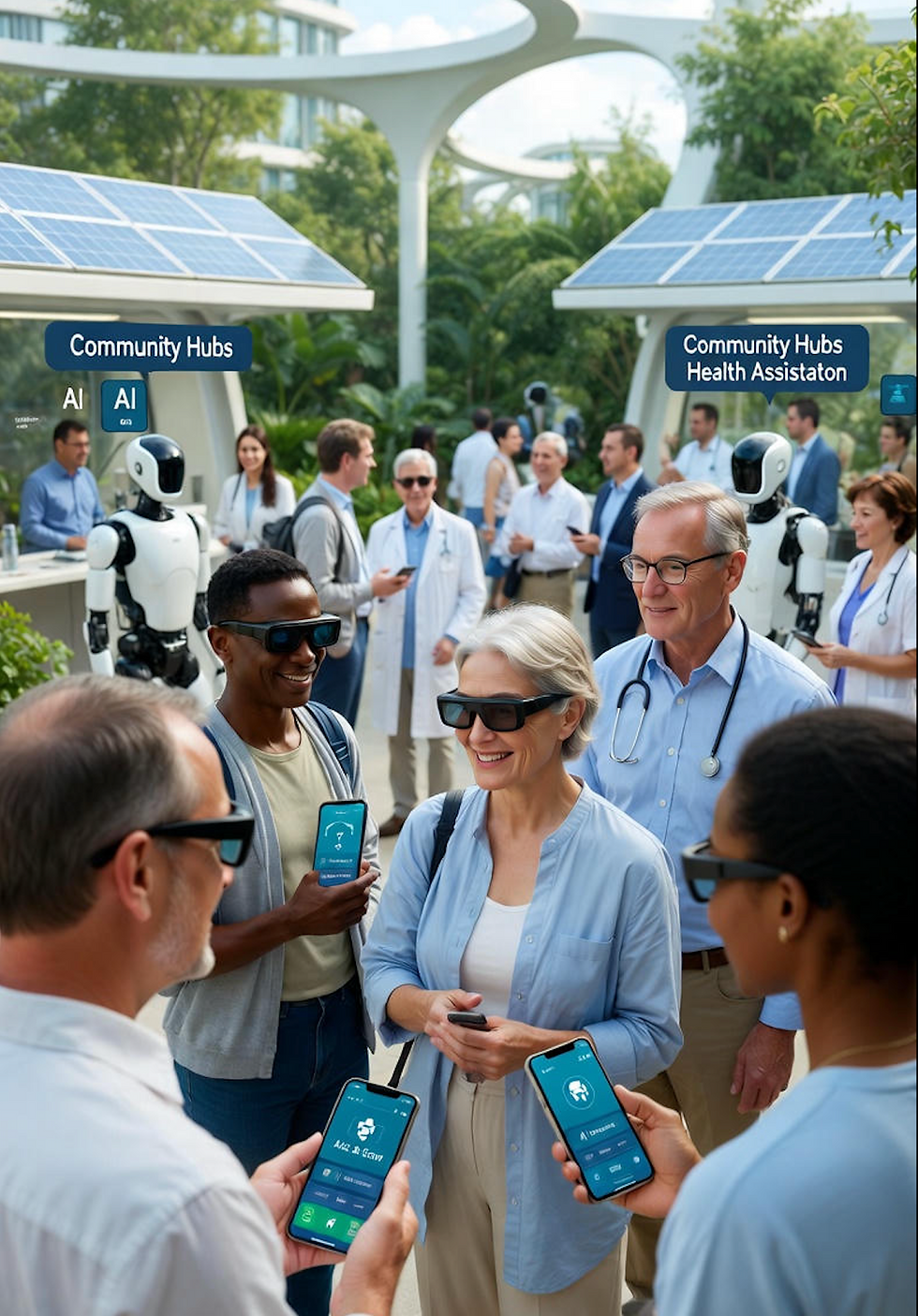
As the founder of a startup developing an AI-driven health assistant for people with chronic conditions—like diabetes—I've spent countless hours imagining how technology could reshape our world for the better. Today, we're already seeing glimpses of AI's potential in healthcare, from real-time glucose monitoring to personalized treatment plans. But what if we push that vision further? What if we dare to dream of a true utopia, where AI serves humanity's highest good, eliminating barriers to health and well-being? In this post, I'll paint a picture of that future—a world of sustainable abundance, universal high income, and free healthcare for all. We'll focus especially on how this could revolutionize life for those living with diabetes, turning a chronic condition from a daily burden into a seamlessly managed aspect of a fulfilling life.
A New World: Sustainable Abundance and Shifted Priorities
Imagine waking up in a home powered by sustainable, zero-cost energy sources—solar panels enhanced by AI optimization, or community fusion reactors that provide endless clean power. Healthy, nutritious food is abundant and accessible, grown through AI-managed vertical farms that predict and prevent shortages. Money, as we know it, fades into irrelevance. AI and robots handle every repetitive, digital job—from data entry to manufacturing—freeing humans to pursue passions and share talents.
In this society, the meaning of life shifts away from grinding for bills and toward genuine human connection and creativity. No more worries about affording rent or groceries; universal high income ensures basic needs are met without question. People thrive by exchanging what they love: A painter travels to another city to create a custom mural for a homeowner, who in return offers meals, a tour of local sights, and perhaps a handcrafted piece of furniture. They bond over shared experiences, building community without a single transaction.
This isn't just fantasy—it's built on emerging trends. AI is already driving toward post-scarcity economies, where technology eliminates material limitations and fosters abundance. In healthcare, this means access to quality care becomes a fundamental right, not a privilege tied to wealth. You don't schedule appointments or navigate insurance; you simply seek help, and the system responds automatically, powered by AI that anticipates needs before they escalate.
The Heart of the Vision: Free, AI-Powered Healthcare for All
In this utopian future, healthcare is proactive, personalized, and omnipresent. AI acts as a vigilant guardian, integrating with wearables, smart homes, and even implantable devices to monitor health in real-time. For diabetics, this means no more finger pricks or guesswork. Continuous glucose monitoring (CGM) systems, evolved from today's tech, use AI to analyze blood sugar patterns, predict fluctuations, and adjust insulin delivery seamlessly—perhaps through smart pumps or even non-invasive patches. Early diagnostics catch pre-diabetes before it develops, using data from medical history, genetics, and even retinal scans to identify risks with pinpoint accuracy.
But it's not just about tech; it's about humanity. Clinics and hospitals are community hubs where AI and robots handle the routine—scans, diagnostics, medication dispensing—under the oversight of a single human doctor who focuses on empathy and complex decisions. For someone with diabetes or cardiovascular issues, care looks like this: You feel off one morning, and your AI health assistant (an advanced version of apps like ours, running on phones or smart glasses) alerts you to a potential blood sugar dip. It guides you to the nearest care center, where robots perform initial assessments—drawing blood, running AI-powered analyses for subtypes of diabetes or heart risks, everything is done within minutes, no more long waiting lists and waiting times. The human doctor reviews the data, discusses your lifestyle with you and your AI assistant that keeps track of your daily routine, and approves the best AI tailored plan that includes not just meds but holistic support: nutrition advice, exercise routines, and even mental health check-ins.
Meanwhile, a cardiovascular patient might arrive with irregular heart rhythms detected by their wearable. AI cross-references global data to predict complications, robots administer tests, and the doctor ensures the care aligns with the patient's values—perhaps incorporating alternative therapies like yoga or acupuncture if that's their preference. This setup ensures every person gets comprehensive, equitable care without wait times or costs. AI streamlines everything, reducing unnecessary expenses and making advanced treatments affordable for all. No more "surprise illnesses"—AI's predictive power catches issues early, turning healthcare from reactive to preventive utopia.
I believe technology is an extraordinary servant, but a dangerous master. That’s why I envision the most prosperous future for humanity as one where AI amplifies human potential—guided firmly by human wisdom, empathy, and oversight. Empowers the best doctors (a couple top physicians that oversee AI and can provide the best care for the patient) to focus on healing relationships, while robots eliminate drudgery. For diabetics, this means living without fear: Your AI companion suggests meals based on real-time data, connects you to peer support groups, and even simulates future scenarios to motivate better habits. Outcomes improve dramatically—fewer complications, longer lives, and a society where chronic conditions don't define you.
Nova Mundi: The Platform Powering Human Exchange
At the core of this world or society is "Nova Mundi," an AI-driven platform that connects talents and needs globally, fostering a money-free society of benevolence. Think of it as a benevolent matchmaker: You log your skills—what you're best at and love doing—and AI pairs you with others who could benefit. A musician travels for a wedding concert, receiving lodging and stories in return. A chef crafts a feast for a birthday, swapping for custom furniture from a woodworker. A healer offers alternative medicine sessions, staying with a family to provide ongoing support.
In healthcare, imagine a nutritionist passionate about plant-based healing offering to cook weekly meals for a diabetic. In exchange, the diabetic—perhaps a storyteller—shares tales or teaches a skill like gardening. Or a yoga instructor specializes in cardiovascular health, leading sessions for heart patients while receiving art therapy from another member. AI ensures matches are local when possible, building communities of good-hearted people who help each other without deceit or hierarchy.
Governments? Obsolete, as AI handles logistics, resource allocation, and conflict resolution fairly. Hard tasks—like supply chains or data security—are automated, letting humans focus on joy, creativity, and connection. This isn't dystopian control; it's liberation, with privacy safeguarded and societal choices guiding AI toward equity. For diabetics, Nova Mundi means a network of supporters: AI connects you to mentors who've managed the condition holistically, or to experts in emerging therapies, all in a spirit of mutual aid.
Toward This Bright Horizon
This utopian vision isn't inevitable, but it's achievable with intentional choices—prioritizing AI for good, investing in ethical development, a truth-seeking AI, and building platforms like Nova Mundi. As we at Equinox Global Health develop our AI health assistant, we're laying the groundwork: real-time insights on phones and smart glasses that empower users today, evolving toward this seamless future.
What do you think? Could this be our new world? Share your thoughts in the comment section. Together, we can make healthcare—and society—a true paradise for all, especially those navigating diabetes. Don't lose hope!


Comments